
Gamification and game-based learning are often confused, but they are not the same thing. Gamification is the integration of game elements into an activity, such as a Kahoot!, which is an interactive quiz game. Game-based learning is immersive and puts you within a game to learn different skills, such as Minecraft. This article Gamification and Game-Based Learning, by the University of Waterloo summarizes the differences as gamification applying to game elements or frameworks to existing learning, and game-based learning activities being intrinsically game-like.
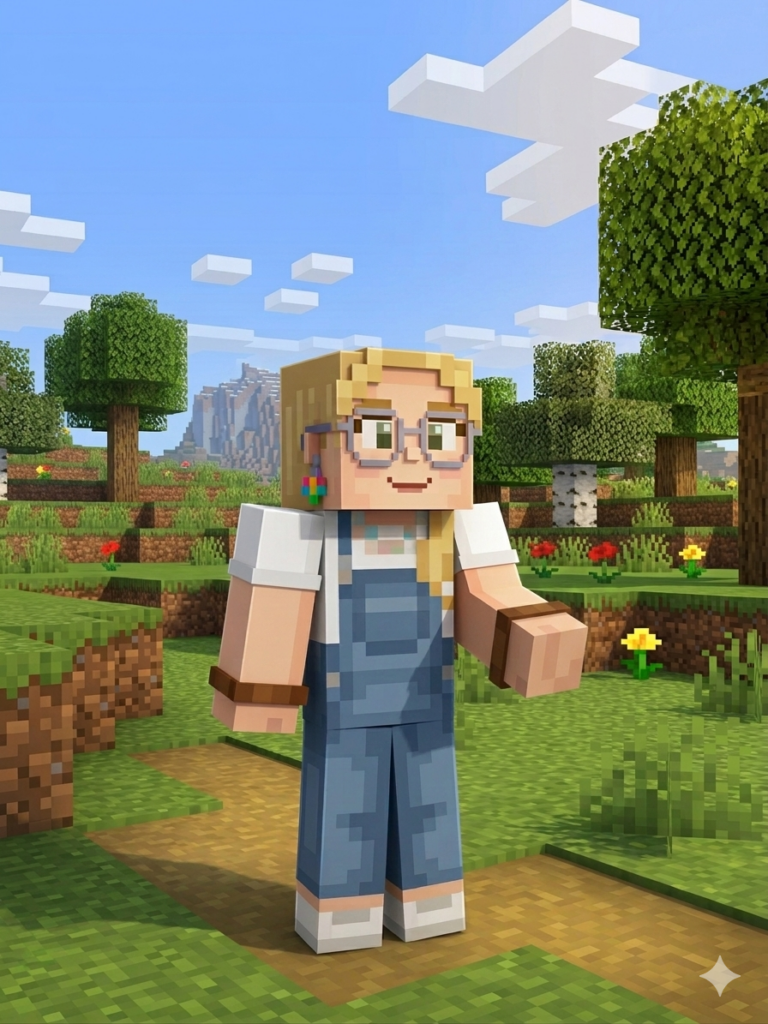
Photo credit: Gemini, Nanao Banana 2.0
One great way to introduce game-based learning into your class is with Minecraft. Minecraft Education is a site that allows educators to bring Minecraft into their classroom creating an immersive learning experience. Minecraft is free for education if your district uses Microsoft, so ask the tech department if you are able to get access for free. There are different Build Challenges you can do with your class to explore the curriculum and real world problems. Challenges can be collaborative or independent depending on what suits your learners best. Minecraft also has Esports, or online sports games, which encourages teamwork, problem-solving, and communication. Overall I love the idea of bringing Minecraft into a classroom. I think that you can use it in many different subject areas. The game is familiar to many students, which draws attention to the learning and makes it more engaging. There are also pre-built worlds, such as A Pacific Northwest Coast Experience, that allows students to be immersed in a world where they can learn from elders and knowledge keepers, harvest for winter, and sustain the village.
Personally, I feel like gamification and game based learning should be built into activities intentionally. The game shouldn’t feel like an afterthought. The material you are teaching should be embedded into the activity that allows the learner to develop skills while playing the game. Knowing your learners is extremely important for creating meaningful and engaging content, which applies to creating game content as well. Some students might be motivated by competition with their peers and rewards. Other students might be motivated by goal setting, progress tracking, and achieving new personal best scores. Creating game content isn’t in itself engaging, so we must consider what is going to make it engaging to the target audience. Before you design your activity consider: games your learners enjoy, topics that are meaningful to the class, interests beyond the class, types of tasks that fit the needs of your learners, group sizing, individual student roles, and connecting content to the competencies.
A gamified lesson doesn’t have to be online or use technology. You can use technology to support the development of your lesson by exploring what others have created and then consider how you can support teaching that with a game. In our math class last semester I explored the idea of gamifying math for Grade 8s by creating a Math Campaign to teach geometry. I prefaced the activity with a storyline to set the tone for the campaign by informing students everyone over 14 years old had forgotten all math skills. Students had a campaign goal to define the mathematical dimensions of the bridge based on the images architects had drawn. Students work in small groups and assign themselves roles that are outlined in the campaign. I wanted students to have an interactive and hands on activity, so once they solved the equations they were able to build the bridge. I was exploring online lesson plans and activities when I came across a math lesson where they looked at the area of shapes and creating 3D shapes from 2D shapes. I had watched a Instagram video on teaching using campaigns and the benefits for different learning styles. I thought I would try and connect the two ideas for a geometry math unit to make the material more engaging.
My advice for teachers is find other teachers who inspire you to teach more than textbook material or worksheet. We can create tasks that engage our students more than any worksheet ever could. Lots of teachers already have gamified content that you can bring into your classroom, or you can take those ideas and run with them.