
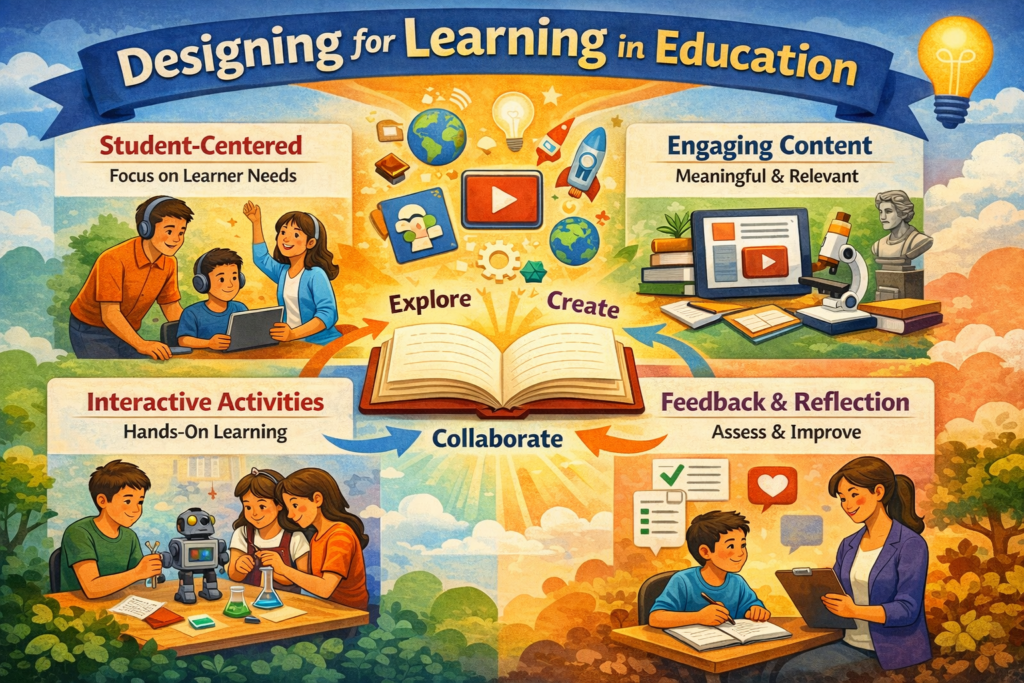
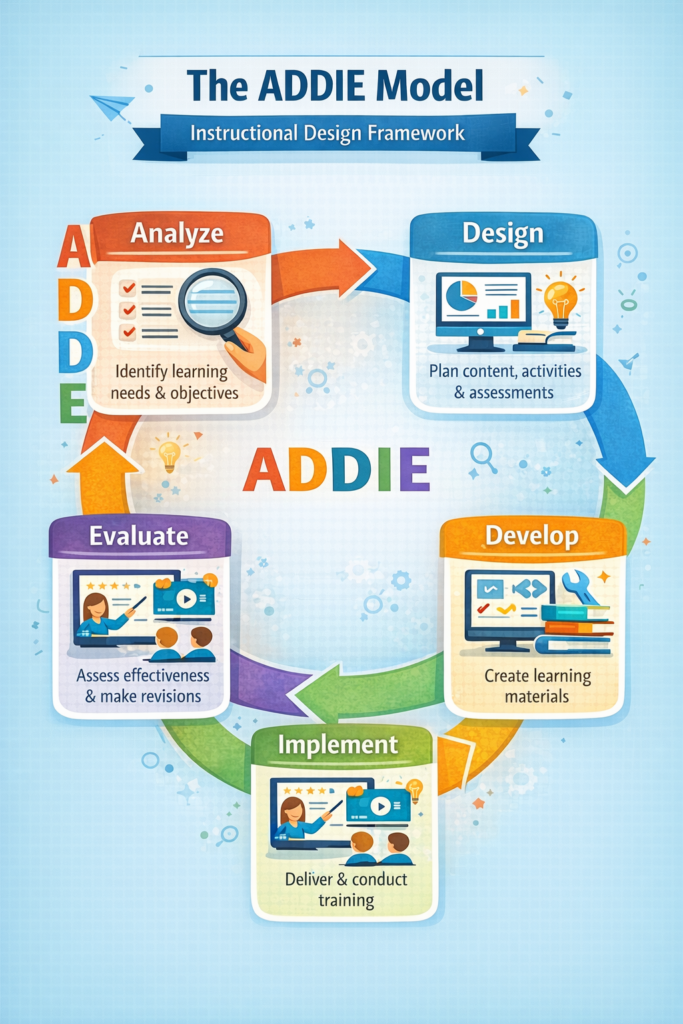
Design is something I find especially interesting and love exploring. Last semester my cohort was in psychology and we were able to do a final project based on a topic of interest. I decided to research increasing students positive behaviours which ultimately can be supported by design. (Here is a link to my project if you are interested!) As teachers it’s our job to teach beyond the average, but often we are pushed to our limits with planning and designing content. Teachers are put in classrooms with few tools, minimal training for design, and little to no training for navigating behaviour. The result of this is teachers who are overworked and students who begin to act out with poor behaviours as they lose interest in content that is poorly designed. If this cycle continues both parties suffer as teachers burnout and students lose confidence. As design improves behaviour should follow, making understanding design critical for teachers. While this sounds great, what do I even mean when I am talking about design. Design, or designing for learning occurs when we are able to create content that is adaptable and accessible, meaning it can suits the needs for any learning environment and targeted learner. You can think of design as the broad term that encompasses many different aspects within it. One model of design is the ADDIE model, which goes through fives stages of design: analysis, design, implementation, evaluation, and additional resources. This model is great for designing courses and even lesson planning.
Some people also refer to design as universal designs, which can be true depending on the desired design but doesn’t encompass the process of design. Universal designs are how we incorporate the accessibility component into our design process. When we plan learning to suit the needs of every learner, we are trying to create universal designs for learning. This doesn’t mean that we are giving every learner a worksheet that suits their specific needs. Instead, we are creating a worksheet that suits the needs of every learner in that class. Students don’t always want to be handed a separate paper, as this would tell them they don’t fit the standard. One of my personal favourite sites to explore universal designs is the Center for Applied Accessible Technology (CAST). It serves as a great entry point to learn more about UDL frameworks and allows teachers to do in depth learning by giving links to books, media, and research. Using universal designs doesn’t look any specific way, but instead tries to make learning as accessible as possible. Teacher can do simple things in classrooms such as using microphones, having large font sizes on slides, and having accessible seating.
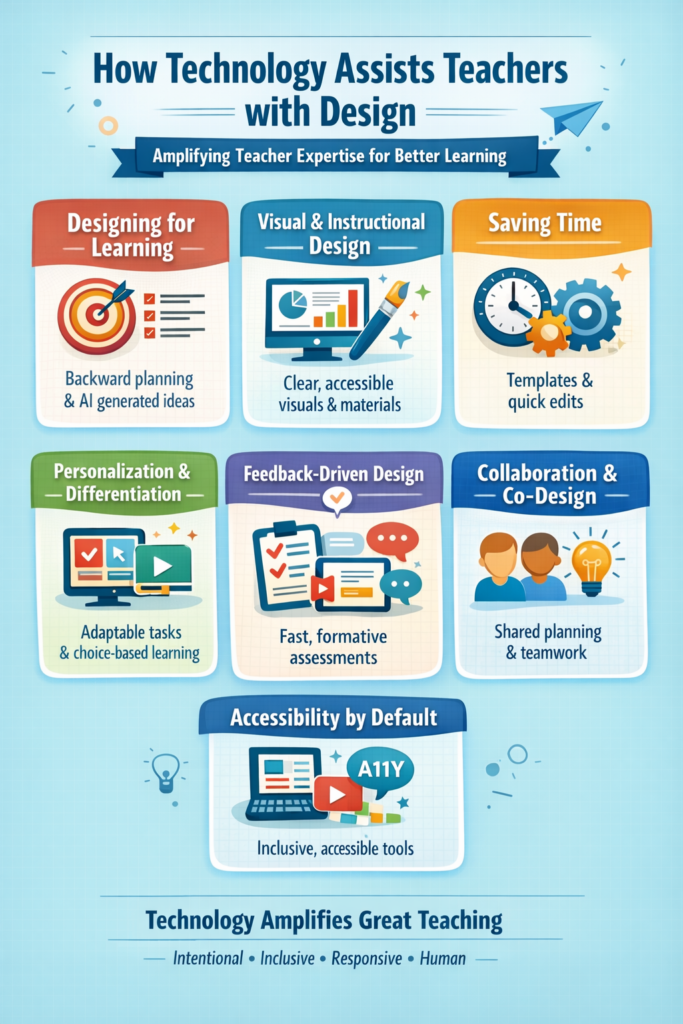
Technology provides teachers with the ability to design content for our classrooms, especially AI. We can use AI to design content for our classes, provide students with accessible technology, and discover new topics and content for our classes. GenAI can act as an assistant to teachers by creating drafts based on prompts based on learning targets, or big ideas within the curriculum. When we design starting with these broader learning targets and work towards creating specific content, we are using backwards design, or understanding by design. While AI can function in the opposite direction, providing it with specific confounds optimizes the results. Once you have your topic and desired outcome for design, such as creating a worksheet or slide deck, it can be easily connected to big ideas. If AI is struggling with the task, consider changing the design you are using. The goals might be better suited for another type of design due to the topic being broad or narrow. When creating content, you have to be extremely specific with what you ask AI to design. You can also rework the assignment with AI, but often AI has less creative results than desired. Most AI won’t include images or have perfect formatting, so as a teacher your role is to ensure that you have the result you are aiming for. Make sure you are checking the results for proper designs by referring to specific models. You can create checklists to make sure you have designs that are suit your learners needs. These checklists allow you to ensure the materials you created meet a high standard for design.