
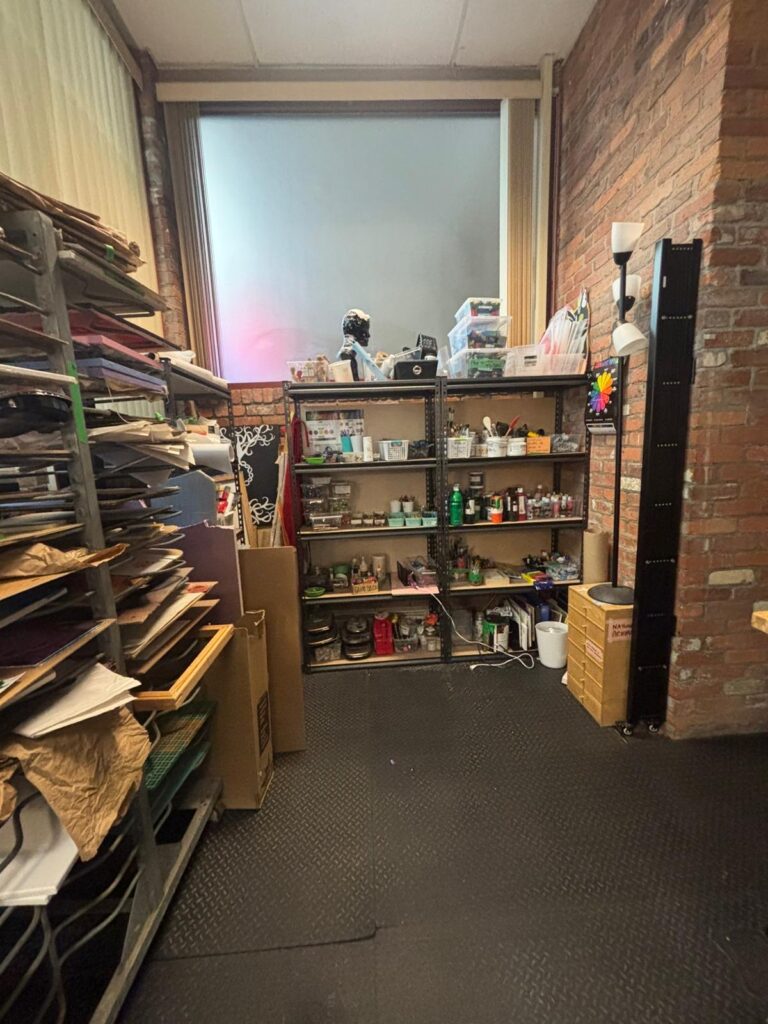
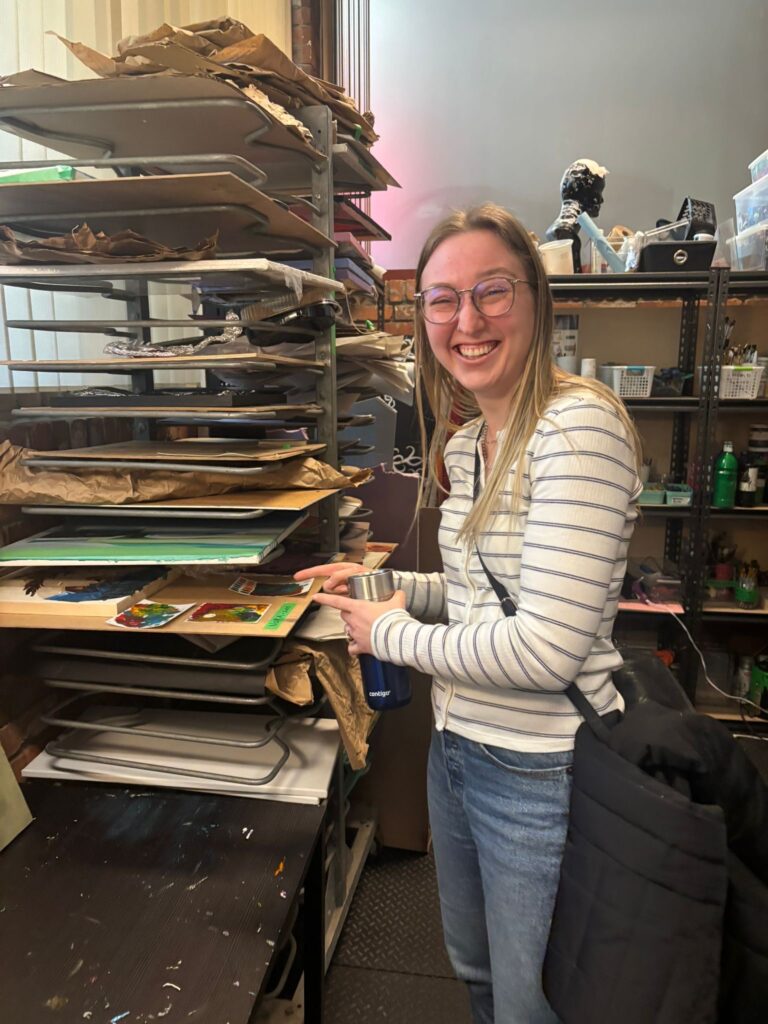
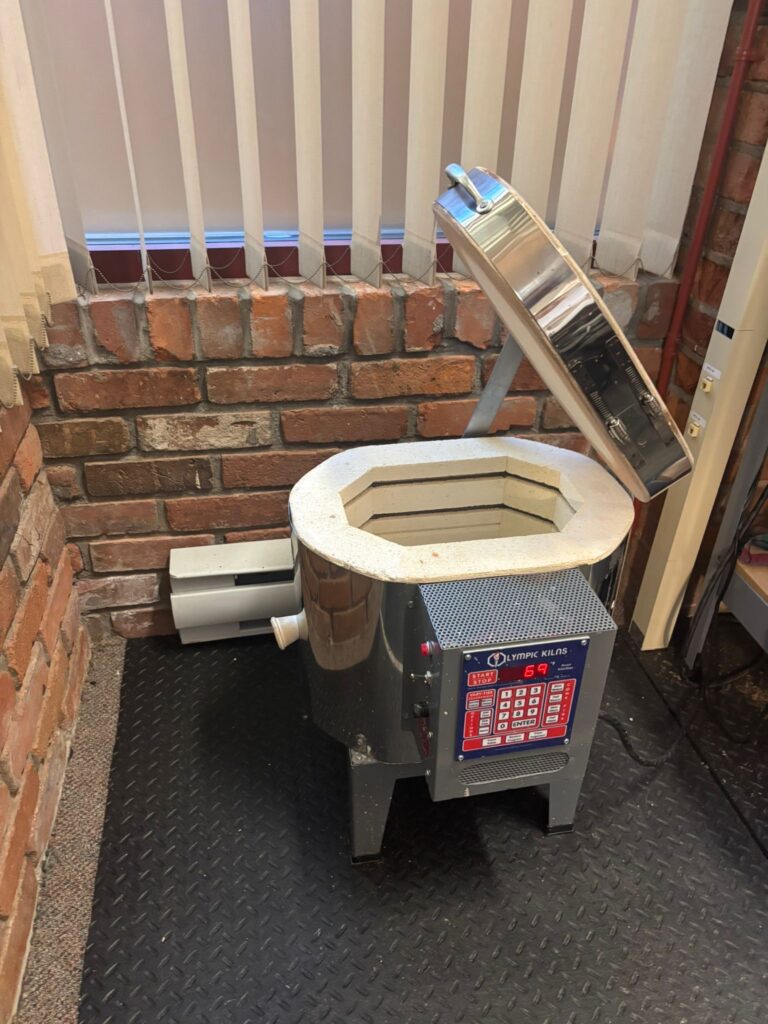
Photo credits to Alexis!
Growing up I was very lucky to be in a small school that focused on student creation and inquiry. When I was passionate about a topic I was able to explore it. I had a lot more freedom than the typical standardized classroom. Starting in grade 6 I was introduced to inquiry projects, which sparked my passion for science, math, and art. As young as 12 years old, I was able to explore societal and environmental impacts of climate change and explore that through media, books, art, and interviews with adults in my life. I did see many of my peers struggle during inquiry exploration. Not everyone has the same passion for exploring new topics or families who supported and valued exploring more complex topics. My teachers may have supported my exploration, but they didn’t have the proper pedagogical understanding of how to support learners with inquiry. I love the idea of developing personal learning approaches, but this isn’t something we can accomplish overnight in the public school system. It will develop as teacher are trained to explore inquiry and learn proper pedagogy to support students with their inquiry needs. Education is seeing a shift already due to curriculum changes. I believe that a student-led approach will benefit learners and society as we see a greater need for free thinkers.
I believe that we should be focusing on students interests to help our learners. A student who doesn’t enjoy reading fiction might be driven to read by a scientific article they want to understand. As educators, our job is to support students in the learning journey and challenge students to grow their knowledge. This led to my biggest hesitation before going to see the Pacific School of Innovation & Inquiry (PSII), which was that the inquiry process might allow students to avoid and not participate in difficult, stressful, or uninteresting topics that are essential to their growth and learning. I asked Jeff Hopkins, “How do teachers motivate students to approach difficult topics that are essential to their learning?” Jeff said that students who come from the public school system may be traumatized and burnt out from being unable to achieve their potential. I don’t know how this never occurred to me as a teacher as someone who has a background in psychology. Students who are on either end of the learning spectrum are left behind to fail when we teach to the average. Making student follow traditional paths may put up barriers if they are not engaged by traditional learning methods. Jeff said that students often eventually come around and wish to explore the topics. For students who have some hesitancy still, cross-curricular studies often allow students to learn what they need to know. In some cases students even develop a new passion for the subject and explore more themselves.
While I loved my experience getting back into schools last semester, I found that most students were uninterested in activities. As teacher we always discuss universal designs of learning and what that might look like in a classroom, but we never are truly free to create spaces that support those aspirations. I think this model could make those aspirations possible by giving students with learning disorders the freedom and technology they need in significantly less time. On the other hand, I wonder if there is potential for students to be lost in this model if it were done on a large scale, such as a public school. I would love to see some data from a larger school that implemented the model.
I would highly recommend getting a tour and talking to some of the students if you get the chance. You can book a visit through their site. I don’t have hesitations about the personal learning model, but do I need to explore the topic and question I have more. Questions I hope to explore more:
- How do we support learners with caregivers that don’t believe in this model?
- How do we support all learners including students who don’t wish for self-direct studies or aren’t able to use these methods? What would learning support look like? How would this look for students who need 1-1 support?
- What would implementation of this model look like in a typical public school?
- How would we educate teachers on this model who don’t wish to change their methods?
- If students are selected to enter the school, are they the more likely to fit within the model? Would this lead to confirmation bias that the model works for the majority of learners when you aren’t including students who preform well in a standardized public school?
- Would a large scale model be as successful? Does the model relies on knowing your learners in depth? Would it be difficult to network with many students needing resources? Would teachers be expected to handle more than ~15 students in the current model?